Private AI: Why "Your Data Never Leaves" Is the Real Adoption Unlock
Capability gets the attention. Trust drives the adoption.
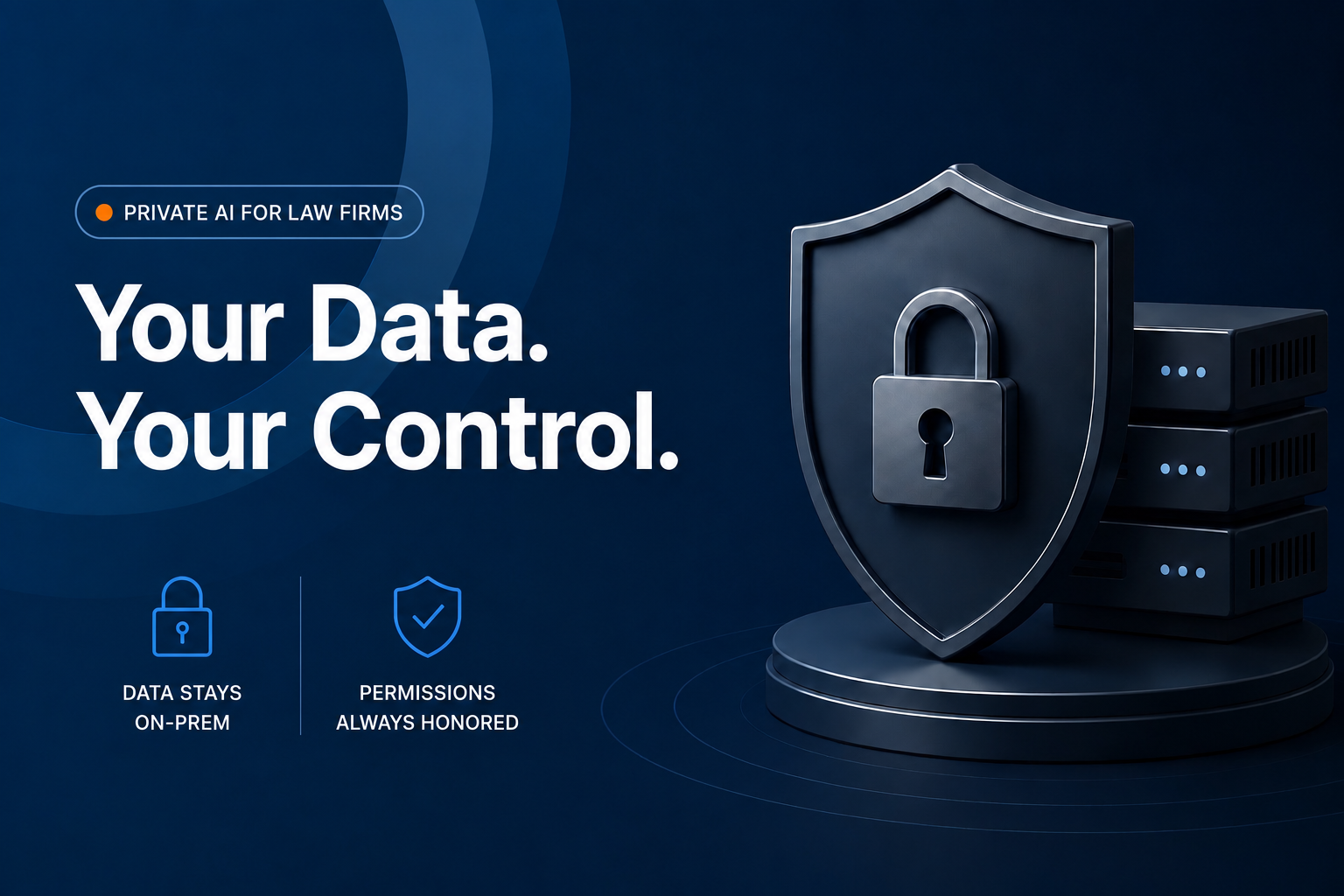
Every conversation about AI in a law firm eventually reaches the same dead end. It's not about capability; this argument is largely settled. The real question, the one that decides whether a tool gets deployed or quietly shelved, is where our data goes. And for law firms, that question is not a preference. It is the whole game.
The structural reality
Legal data cannot be treated like ordinary enterprise content
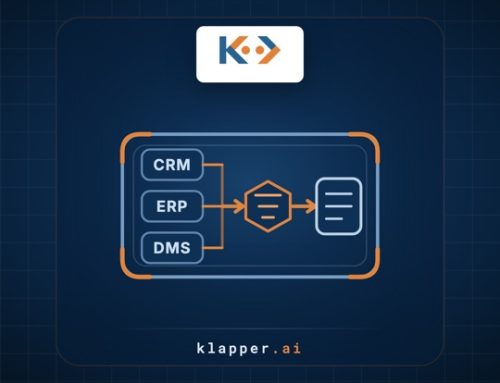
The reason is structural. A law firm holds some of the most sensitive information any organization handles: privileged communications, confidential strategy, and client secrets protected by professional obligation. Any technology that would send that material outside the firm's control, even for brief processing, runs straight into duties of confidentiality and the expectations that clients now write directly into their outside counsel guidelines. So the most sophisticated AI in the world is a non-starter if using it means the firm's data leaves its boundaries.
Privileged communications
Protected exchanges that must remain inside the firm's control.
Confidential strategy
Legal thinking, negotiation positions, and matter plans.
Client secrets
Information protected by professional and contractual obligations.
What private AI changes
Privacy becomes an architecture decision
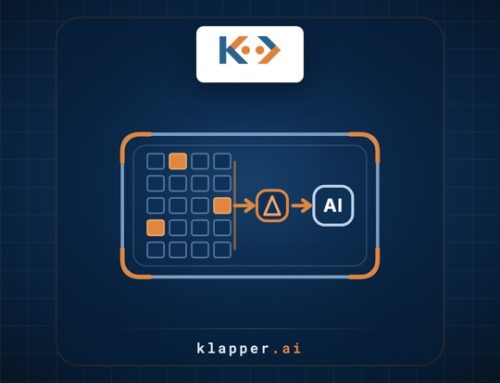
This is why private AI has become more than a marketing phrase. It describes a design choice with real consequences. When AI runs within the firm's own secure environment, and the firm's content is never uploaded to an external model or used to train someone else's system, the calculus changes. The firm keeps control, the data stays put, and the answer to the client's hardest security question becomes a confident one.
The private AI boundary
A conceptual view of how governed content stays inside the firm's secure environment
Privacy is only half the answer
Permission-aware AI is the real trust boundary
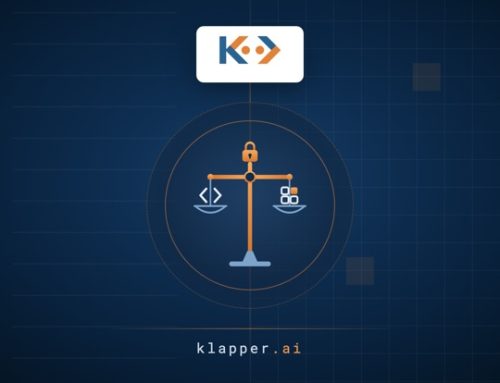
But privacy alone is not enough, and this is where many well-intentioned AI efforts stumble. An assistant that keeps data in-house but ignores who is allowed to see what is still dangerous. Legal information carries permissions for good reason. Ethical walls, matter-level restrictions, and confidentiality boundaries are not obstacles to work around. They are the rules of the profession. The AI worth trusting is the one that respects the exact same access rules the firm already enforces, so a person only ever gets answers built from material they were already permitted to see.
The adoption effect
Trust changes the shape of AI adoption
Put those two ideas together- data that never leaves and permissions that are always honored- and something interesting happens to adoption. The usual objections start to fall away.
Consider the pattern most firms actually experience. A tool is purchased with enthusiasm. A few champions use it. Then adoption stalls, and a large share of licenses go quiet. The common explanation is that people are busy or resistant to change, and there is some truth to that. But a deeper reason is trust. When lawyers are unsure whether a tool is safe to use with real client work, they do the responsible thing and avoid it for anything that matters. Uncertainty, not laziness, is what leaves seats unused.
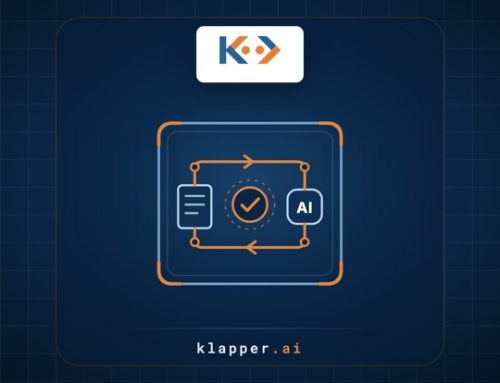
Illustrative adoption curve
The relationship described in the article: confidence unlocks meaningful use
From novelty to real work
Remove uncertainty and behavior changes
Remove the uncertainty and behavior changes. When the security team can confirm that data stays within the firm and partners can see that the tool cannot surface anything a user is not already cleared to access, the tool stops being a novelty for low-stakes tasks and becomes usable for real work. Adoption follows trust, not the other way around.
Evaluation framework
Ask boundary questions before intelligence questions
There is a lesson here for how firms evaluate any AI tool. The first questions should not be about how clever the outputs look in a demo. They should be about boundaries. Where is our data processed? Does it leave our control? Does the system honor our existing permissions exactly? Can our own security team verify all of this rather than take it on faith? A tool that answers those questions well earns the right to be judged on its intelligence. A tool that does should not get that far.
- Where is our data processed?
- Does it leave our control?
- Does the system honor our existing permissions exactly?
- Can our own security team verify all of this rather than take it on faith?
The bottom line
Trust is the real adoption unlock
Capability gets the attention. Trust drives the adoption. For law firms, the quiet phrase your data never leaves is not a footnote. It is the unlock.
Schedule a 30-minute call →