The Real-Time Delta:
Solving the Index Sync Nightmare in Multi-System Legal AI

Imagine a receptionist working from a printed staff directory that gets reprinted once a night. At 10am, a colleague changes her phone number. For the rest of that day, every caller gets the old number, delivered with complete confidence, because the receptionist has no way of knowing the page in her hand is already out of date.
Now swap the directory for your firm's document library, and the receptionist for your AI assistant.
A partner is on a client call and asks the firm's AI for the current liability cap in a draft agreement. It answers instantly. It is also wrong. The cap changed six minutes earlier, when opposing counsel sent back a redline. The AI never saw it.
Nobody made a mistake. The AI answered from what it had.
The problem is the gap between the moment something changes and the moment the AI finds out.
Why the AI Does Not Simply See the Change
This is the part that surprises most executives. If a lawyer saves a new version into the document system, why does the AI keep quoting the old one?
Because the AI is not watching your documents. It never opens them at the moment you ask.
What it reads instead is a prepared catalogue, called an index. Think of it as a searchable summary of every document, built in advance so that answers come back in under a second rather than in twenty minutes.
When someone saves a change, they change the document. They do not change the catalogue. And nothing automatically tells the catalogue that anything happened.
What changes, and what does not
the document
the catalogue
So why not rebuild the catalogue continuously? Three reasons, and each one is worth understanding:
It costs real money.
Re-reading millions of documents consumes computing power that is billed by volume, so most systems do it once a night in a single large batch.
The systems do not talk to each other.
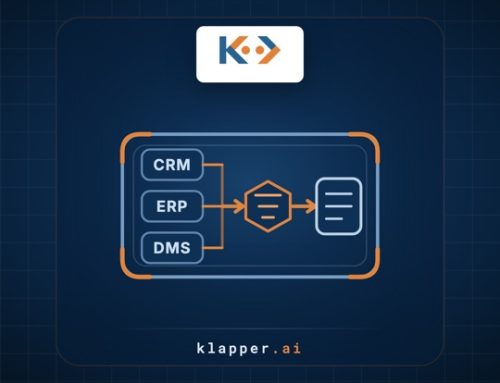
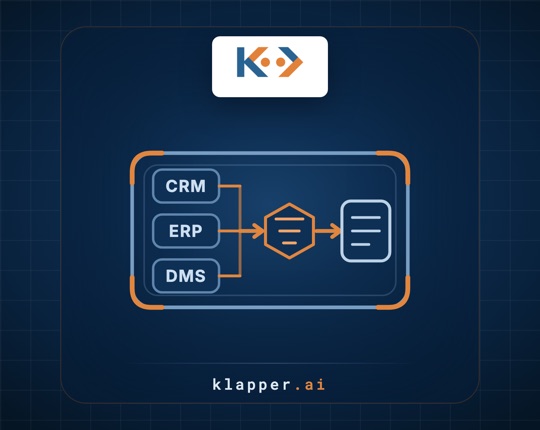
A redline lives in the document management system, the approval lives in email, the matter status lives in practice management. Each has its own rules and its own limits on how often it can be queried.
It was never designed for this job.
Traditional crawlers were built to feed a search box, where a human reads the results and can tell an old file from a new one. An AI writing a confident paragraph cannot.
The Five Minute Problem
Call the result the staleness gap: the distance between the moment a document changes and the moment the AI knows it changed.
In a nightly rebuild, that gap can stretch to twenty four hours. Move to an hourly refresh and it is still sixty minutes wide. Tighten the schedule as much as you like and a gap always remains.
The staleness gap, as the schedule tightens
-
In a nightly rebuild
twenty four hours
-
Move to an hourly refresh
sixty minutes
-
Tighten the schedule as much as you like
a gap always remains
In most industries, a document being a day behind is an inconvenience. In legal work, it is the substance of the advice.
A clause changed at 4pm changes the client's position at 4pm. A filing amendment, a revised settlement figure, an email approving a new term: these move a matter in minutes, not days.
Why Grounding Alone Is Not Enough
Firms are often told the answer to AI hallucination is grounding, meaning the AI must cite real documents rather than invent them. That helps, but it does not close this gap.
Researchers studying commercial legal AI tools have found that even retrieval grounded systems still produce inaccurate or unsupported outputs on a meaningful share of legal queries. The failure has simply changed shape.
Instead of inventing a citation, the AI now cites a real document that happens to be the wrong version.
Courts have already tracked well over a hundred documented cases worldwide involving AI generated errors in legal filings.
An answer built on a superseded draft does not look like a hallucination. It looks like a citation, complete with a file name and a date. That is what makes it dangerous, and why it survives review.
The Fix: Update the Difference, Not the Whole Library
The shift underway across serious AI deployments is from scheduled rebuilds to what engineers call delta indexing.
Delta simply means the difference. Rather than re-reading the entire library every night, the system updates only what changed, the moment it changes.
In a legal environment, that means three things working together:
One agreed source of truth.
The document management system holds the authoritative version, so when platforms disagree, the AI defers to it rather than guessing.
Events, not schedules.
A redline accepted at 2:47pm triggers its own update within moments, instead of waiting for the next overnight crawl.
Version awareness.
The system can distinguish a superseded draft from the live one, rather than surfacing whichever version happens to match the keywords best.
Why This Reaches the C-Suite
Trust, not access, is now the real adoption barrier.
- General Counsel usage of generative AI has climbed sharply, yet daily use and genuine confidence in outputs remain far behind the headline adoption figures.
- The gap shows up in returns: teams that trust their AI outputs report meaningfully stronger results than those that do not.
An assistant confidently wrong about a superseded term does not just produce one bad answer. It teaches a lawyer to stop relying on the system, and that is how a seven figure investment quietly becomes shelfware.
The firms getting this right are not chasing smarter models. They are closing the distance between the moment truth changes and the moment their AI knows it.
Explore KLapperFAQ